The Renaissance of Italy's Natural Thermal Springs and Historic Villages: A Rediscovered Treasure for Sustainable Touris
Italy is rediscovering the authentic charm of its natural thermal springs and lesser-known historic villages, offering a sustainable tourism model that values well-being, culture, and local heritage, far from crowded routes.
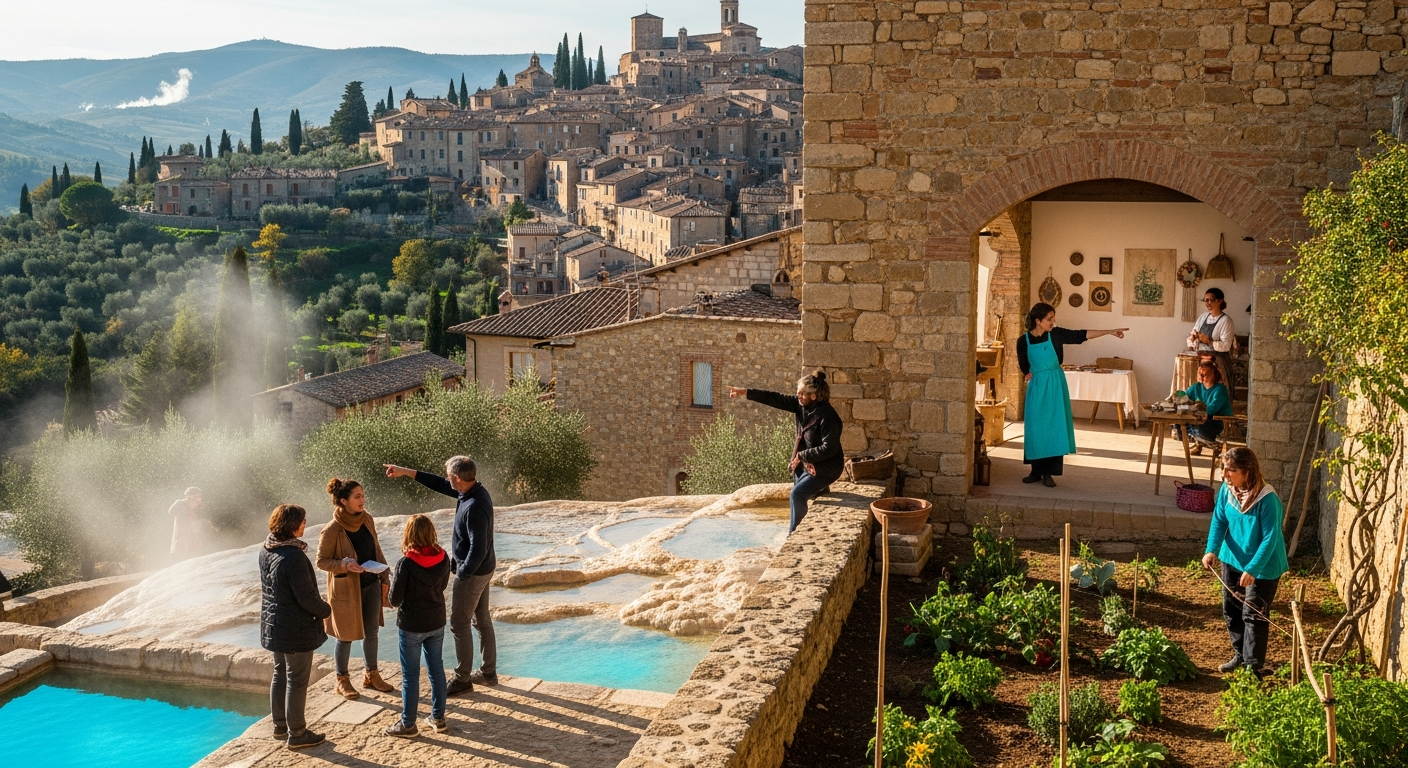
Italy is witnessing a growing rediscovery and enhancement of its natural thermal springs and less-traveled historic villages, proposing a more conscious and sustainable tourism model.
What happened
A renewed interest is emerging for destinations that merge thermal wellness with the cultural and scenic richness of authentic places. Among these, areas like Val d'Orcia in Tuscany and Val Brembana in Lombardy stand out, offering experiences far from mass tourism, focused on nature, history, and relaxation. Val d'Orcia, famous for its UNESCO World Heritage landscapes, reveals lesser-known but equally fascinating corners, such as Radicofani, Bagni San Filippo, Monticchiello, and Castiglione d’Orcia. These villages, described by Greenme as authentic and rich in history, are surrounded by accessible natural thermal springs, allowing visitors to immerse themselves in a context of pure relaxation and unspoiled beauty. The experience in Val d'Orcia focuses on discovering a rural and historical Italy, where time seems to slow down and the connection with the territory becomes profound.
In parallel, Val Brembana, an hour from Milan, is re-evaluating its thermal vocation through the rediscovery of San Pellegrino Terme. This locality, globally known for its mineral water, boasts a glorious past as an elite European thermal center, characterized by some of Italy's most fascinating Art Nouveau heritage. Despite a period of decline, its charm has remained intact, and today there is renewed attention to its potential as a wellness and cultural destination, as highlighted by Greenme. These examples are not isolated but reflect a broader trend where travelers seek more meaningful experiences, combining self-care with the discovery of less exposed cultural and natural heritage.
Why it matters
This trend has a significant impact on multiple levels. Firstly, it promotes fairer and more sustainable tourism, distributing tourist flows beyond the most congested art cities and enhancing internal areas and villages that would otherwise risk depopulation or oblivion. The rediscovery of natural thermal springs and historic villages directly contributes to the preservation of Italian cultural and scenic heritage, providing economic incentives for the maintenance and restoration of historical buildings and local infrastructures. For local communities, this means new opportunities for economic development, job creation, and a strengthening of territorial identity, transforming authenticity into added value. Visitors, on the other hand, benefit from a richer and more regenerating travel experience, combining the relaxation offered by thermal waters with immersion in historical and natural contexts of great value. This tourism model offers a concrete answer to the growing demand for authentic and environmentally respectful experiences, away from the frenzy of mass tourism. Furthermore, the focus on natural wellness and local history offers a healthy and culturally enriching alternative, contributing to a better quality of life for both residents and travelers. The resurgence of these destinations demonstrates that it is possible to combine tourism development with respect for the territory, creating a virtuous cycle that benefits all involved stakeholders.
What to watch
Interest in these lesser-known destinations is expected to continue to grow, prompting local administrations and tourism operators to further invest in the enhancement of natural thermal resources and historical-cultural heritage. The implementation of slow tourism and environmental sustainability policies will be crucial to ensure that this rebirth occurs responsibly. The goal will be to balance visitor influx with the carrying capacity of the territories, preserving the authenticity that makes these places so special and attractive. Significant increases in investments in accommodation infrastructure and services dedicated to wellness and culture are anticipated in these areas within the next five years, solidifying Italy's position as a leader in quality and sustainable tourism.